The classic first trip to Greece is Athens plus two Cycladic islands, and the order matters. Start in Athens while you are fresh, take the long ferry to Naxos, make the short hop to Santorini, and fly back to Athens at the end instead of sitting through the same crossing twice.
Day 1-3: Athens
Be at the Acropolis when it opens. Entry is by timed ticket, so book the first slot online (check current prices, which are higher in summer), and walk up from the south slope entrance past the Theatre of Dionysus to avoid the main-gate queue. By 10am the Parthenon is packed and the rock gets very hot. Go straight from there to the Acropolis Museum at the foot of the hill, which holds the surviving original sculptures from the site and has glass floors over an excavated neighborhood.
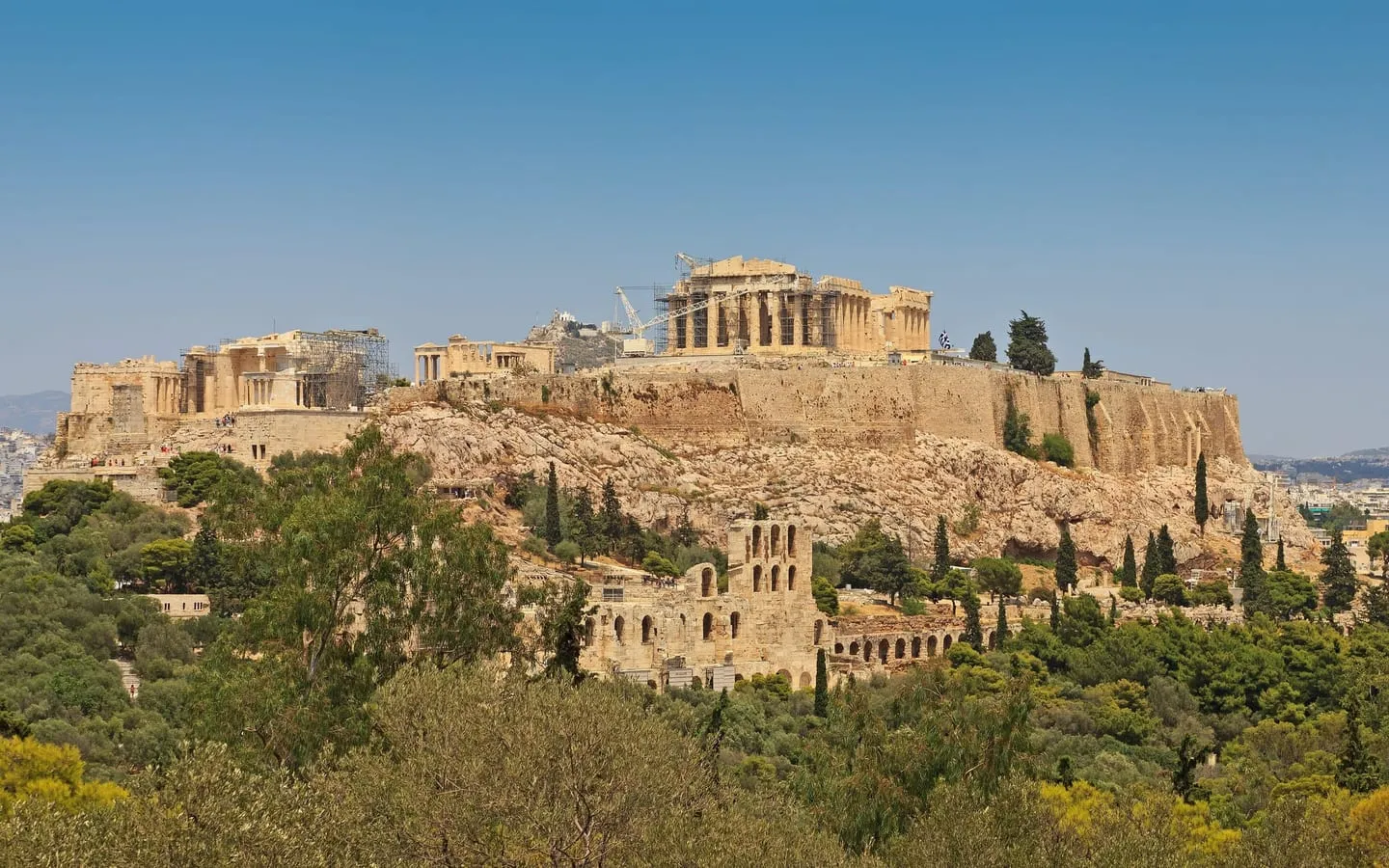 Philopappos Hill, a 15-minute walk from the Acropolis Museum, has this view for free and is the best place in the city for sunset.
Spend day two on the Ancient Agora, where the Temple of Hephaestus is one of the best-preserved Greek temples anywhere, then the Roman Agora and the lanes of Plaka and Anafiotika, a cluster of whitewashed houses built by island stonemasons under the Acropolis. On day three, either climb Lycabettus Hill for the view over the whole city or take a half-day trip to Cape Sounion (about 1.5 hours by car, closer to 2 by bus) for the Temple of Poseidon at sunset. Stay near Plaka or Koukaki so the sights are walkable.
Day 4-6: Naxos
Take an early ferry from Piraeus, about 5 to 6 hours on a conventional ferry or 3.5 to 4 on a high-speed boat. You arrive in Chora, the main town, where the marble Portara, the doorway of an unfinished temple of Apollo, stands on a causeway next to the harbor. Walk up into the Kastro, the old Venetian quarter, and come back to the Portara for sunset.
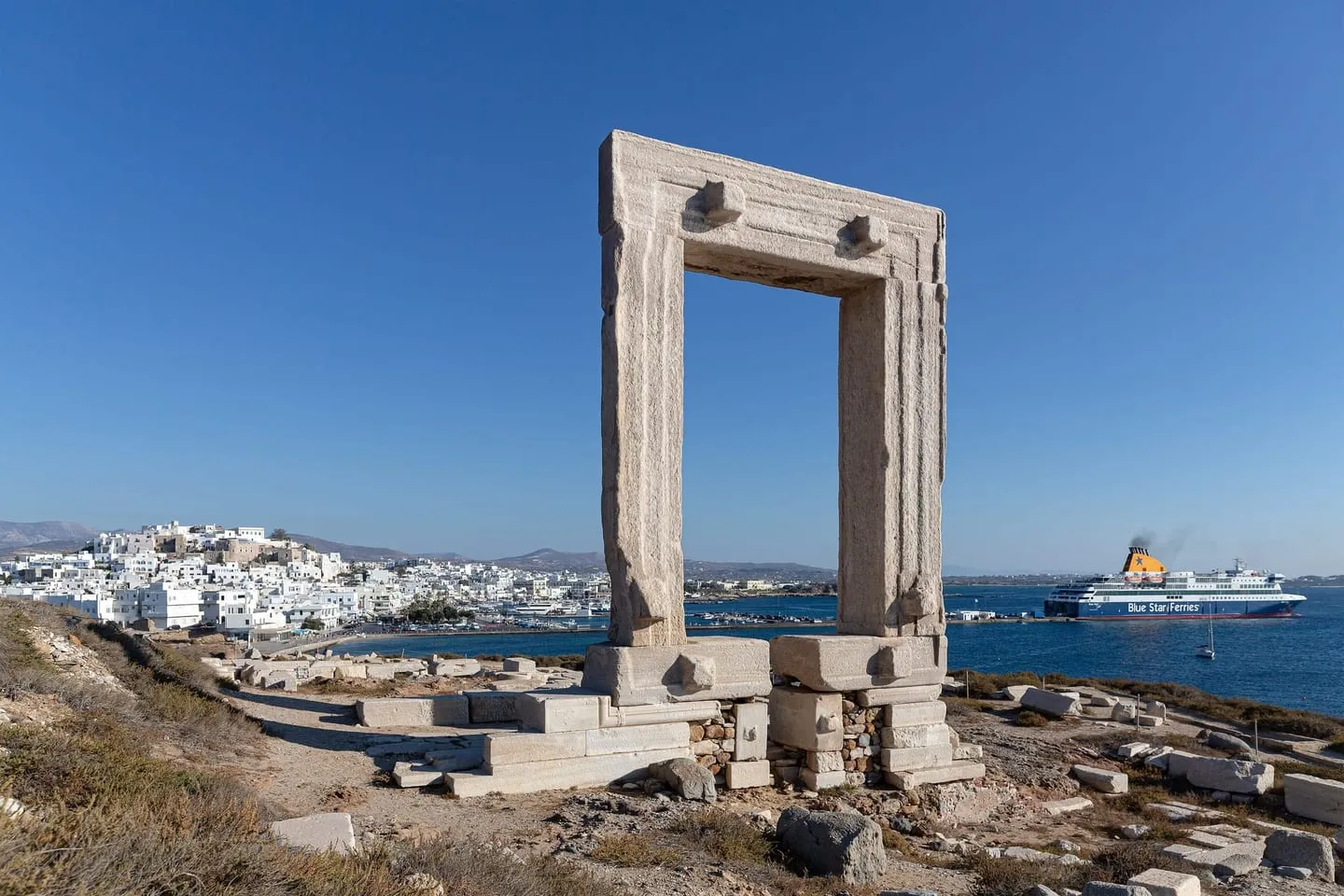 The Portara is a short walk from the ferry quay, so you can see it at sunset on the day you arrive.
Rent a car or scooter for day five and drive into the mountains: Halki for its old kitron liqueur distillery, Apeiranthos with its marble-paved lanes, and one of the unfinished kouros statues lying where they were carved, near Melanes or at Apollonas in the north. Keep day six for the west coast beaches south of Chora, Agios Prokopios, Agia Anna and Plaka, which are long, sandy and far less crowded than anything on Santorini.
Day 7-9: Santorini
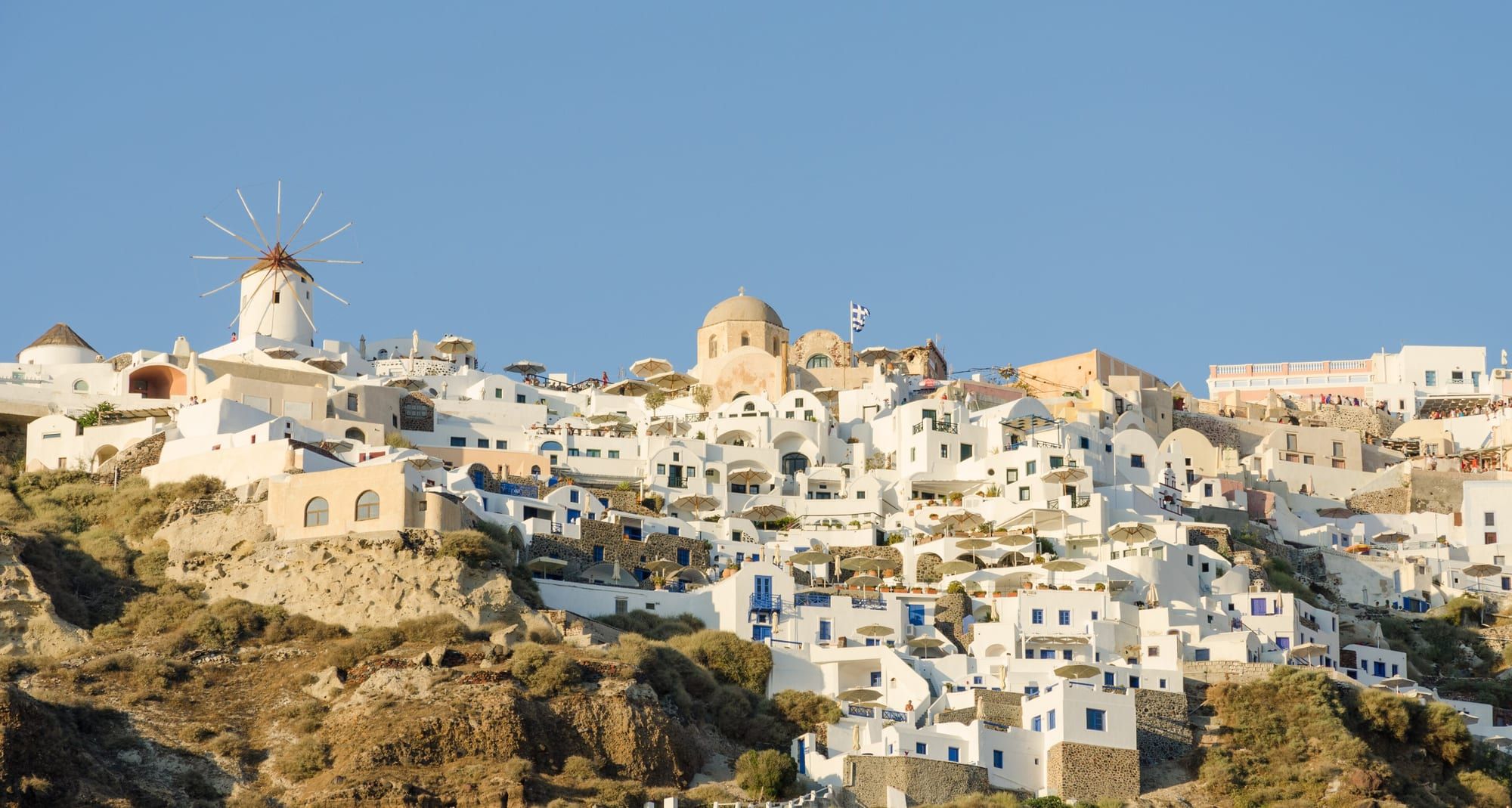
The ferry from Naxos to Santorini is short, about 1 to 2 hours. Stay in Fira or Imerovigli on the caldera rim, or in a village inland such as Pyrgos if you want better prices. On day seven, walk the caldera path from Fira to Oia, about 10 km and three to four hours; start in the early morning, because it has almost no shade. Oia at sunset is famous and very crowded, so either get there early or watch from Imerovigli and Skaros Rock instead.
Day eight: see the Bronze Age town at Akrotiri, buried by the eruption around 1600 BC and preserved under a roof, then visit a winery for the local Assyrtiko white. On day nine, take a boat trip into the caldera to walk on the volcanic island of Nea Kameni and swim in the warm springs off Palea Kameni.
Day 10: Back to Athens
Fly from Santorini to Athens, about 45 minutes, and connect to your flight home, or fly out of Santorini directly if your airline serves it. A ferry back takes most of the day and leaves no margin for a missed connection.
Practical tips
Book ferries once your dates are fixed, especially for July and August, and allow a buffer day before an international flight. The meltemi, a strong northern wind in midsummer, can delay or cancel high-speed boats, and the big conventional ferries are more reliable in rough seas. Greece uses the euro, and cards work almost everywhere, though small tavernas and kiosks on the islands may prefer cash. May, June, September and early October give you warm water, open ferries and fewer people than high summer.