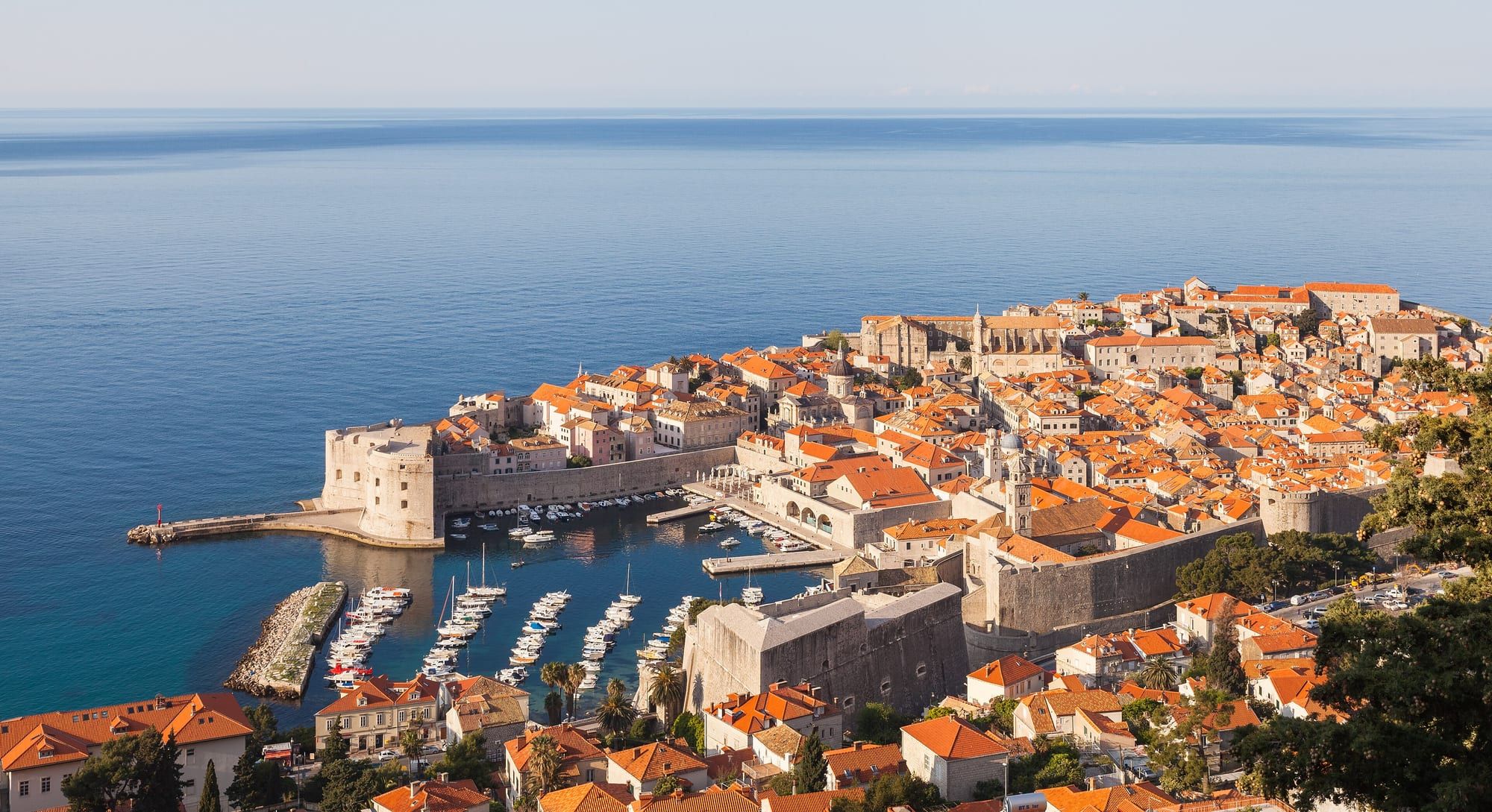
Croatia works best as a one-way trip. Fly into Zagreb, head south through Plitvice to the coast, and fly home from Dubrovnik, so you never cover the same road twice. The only real planning puzzle is the island hop, because the fast catamarans to Dubrovnik run in the warmer months only.
Day 1: Zagreb
Give the capital one day. Start in the Upper Town (Gornji Grad): St. Mark’s Church with its tiled roof, the Stone Gate shrine and the Museum of Broken Relationships, then ride the short funicular down to Ilica. Lower Town has the Dolac market (mornings are best) and the cathedral. If you land late or would rather skip the city, go straight to Plitvice and spend the night there.
Day 2: Plitvice Lakes
Plitvice is about two hours by car or bus from Zagreb, and it is the one place on this route where timing matters most. Book a timed ticket online (prices rise sharply in summer, so check current rates) and aim for the first slot at Entrance 1. That puts you at the Great Waterfall (Veliki slap) and the Lower Lakes before the tour buses; by late morning the boardwalks there are single file. Then take the electric boat across Kozjak lake and walk the Upper Lakes, which are longer, greener and quieter. Plan four to six hours. Swimming is not allowed anywhere in the park.
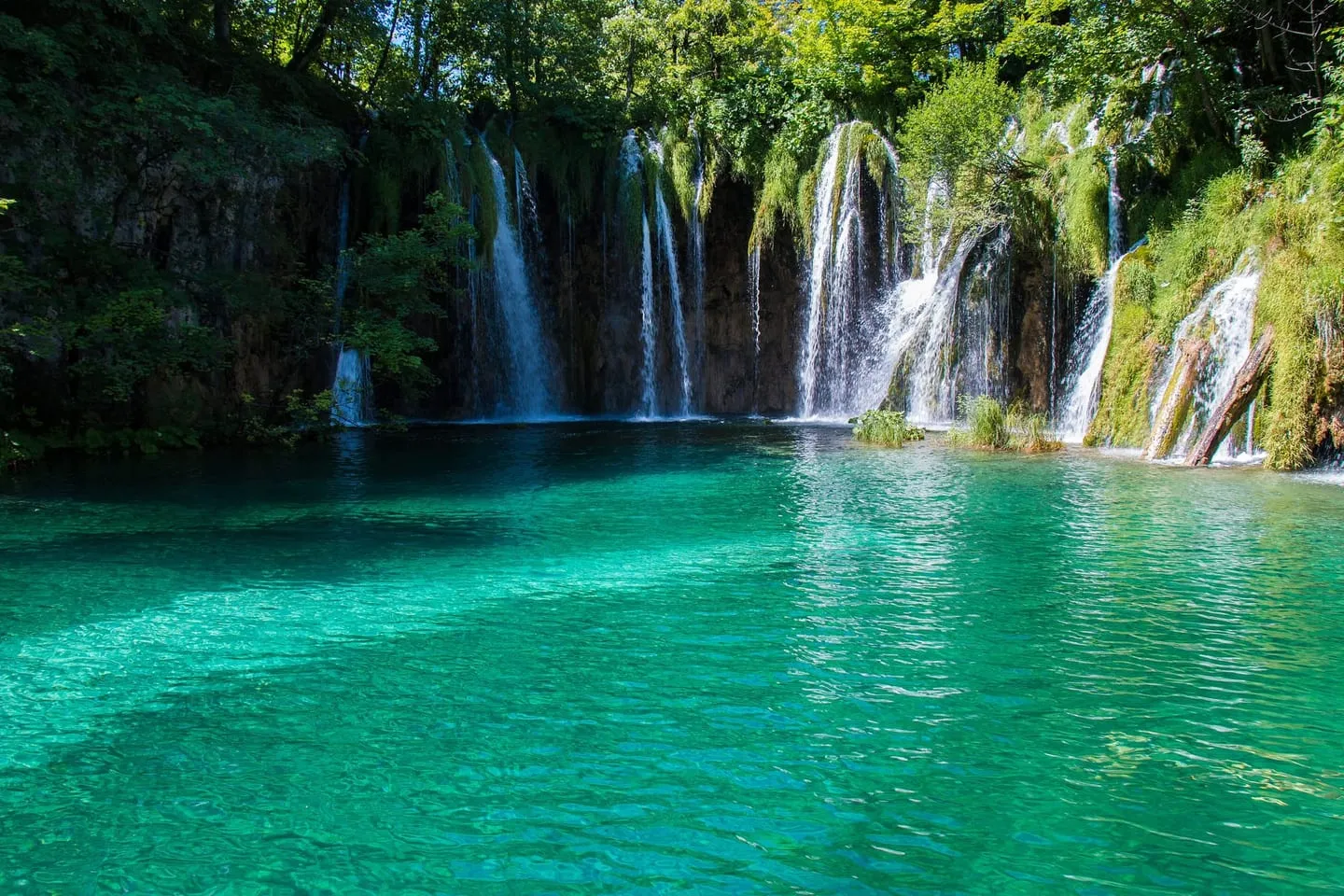 Stay the night near the park so you can be at the gate when it opens, before the day-trip coaches from Zagreb and Zadar arrive.
Day 3-4: Zadar
Zadar is about 1.5 to 2 hours south of Plitvice. The old town sits on a small peninsula and is easy to walk: the round 9th-century Church of St. Donatus, the remains of the Roman forum next to it, and St. Anastasia’s Cathedral, whose bell tower gives the best view over the rooftops. At the tip of the peninsula, the Sea Organ plays notes as waves push air through pipes under the marble steps, and the Greeting to the Sun solar panels light up after dark. Watch the sunset from there. On day four, take a boat to the nearby islands (Ugljan is a short ferry ride) or just swim off the promenade.
Day 5-6: Split
Split is about 2 to 3 hours from Zadar. If you are driving, stop at Šibenik for the stone Cathedral of St. James and at Krka National Park, where swimming under Skradinski buk is no longer allowed but the boardwalks are worth an hour or two. In Split, drop the car and walk into Diocletian’s Palace, a Roman emperor’s retirement home that is now a living neighborhood of shops and flats. Stand in the Peristyle, climb the bell tower of the Cathedral of St. Domnius, and walk the Riva in the evening.
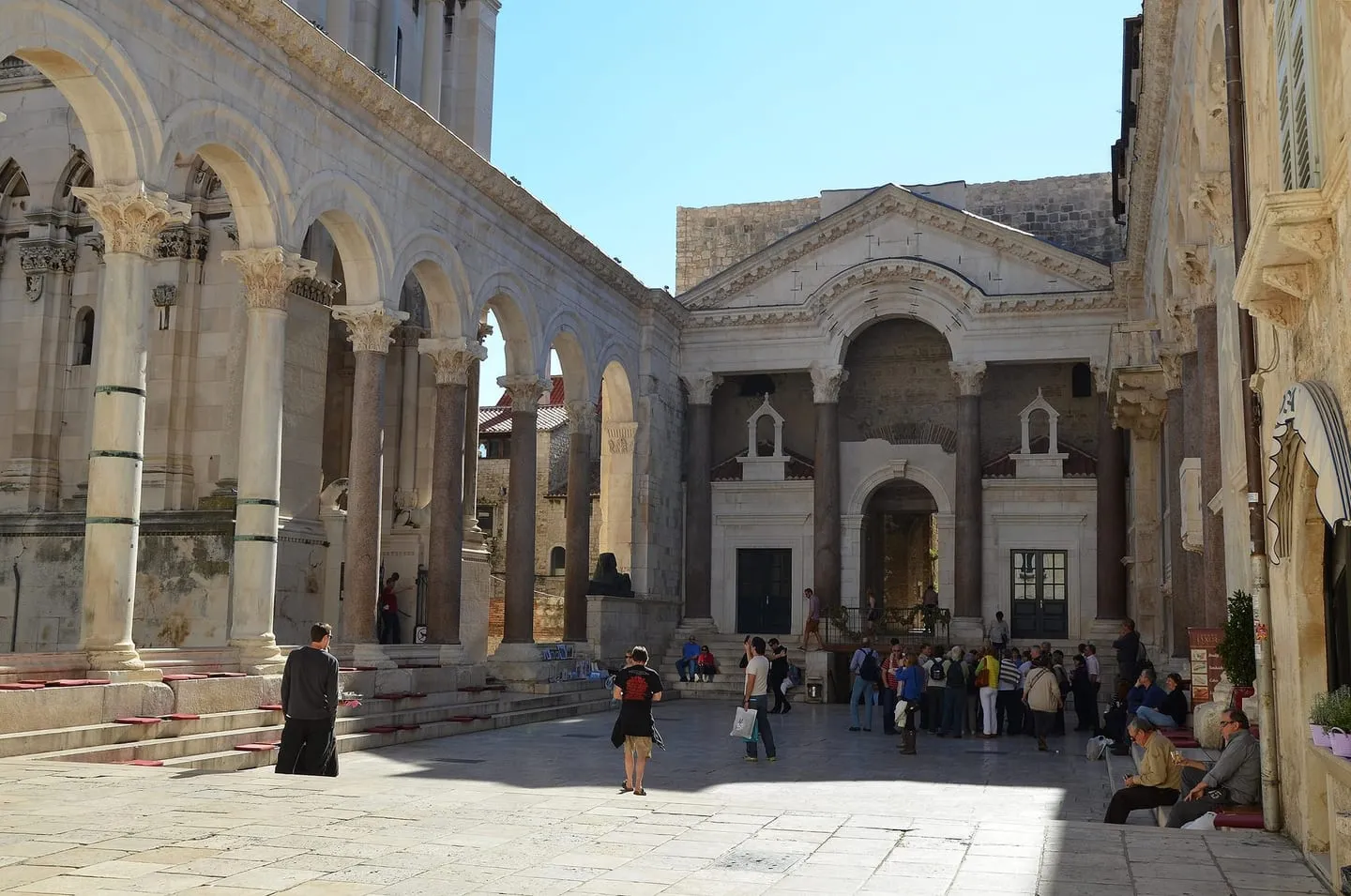 The Peristyle was the palace’s ceremonial courtyard, and the emperor’s mausoleum next to it has been Split’s cathedral for centuries.
On day six, walk or cycle up Marjan hill for the view over the islands, then swim at Bačvice beach, where locals play picigin, a splashy game of keeping a small ball in the air in shallow water.
Day 7-8: Hvar or Brač
Take a catamaran from Split: Hvar town is about an hour away, Bol on Brač about the same. Hvar town is the livelier choice, with the Spanish Fortress (Fortica) above the harbor and taxi boats out to the Pakleni islands for swimming coves. Brač is quieter, and its Zlatni Rat beach near Bol is the one on every Croatia poster. Note that the car ferry from Split to Hvar goes to Stari Grad, not Hvar town, and takes about two hours; foot passengers should use the catamaran.
Day 9-10: Dubrovnik
In season, the catamaran from Hvar to Dubrovnik stops at Korčula along the way and arrives at Gruž port, a 10-minute bus or taxi ride from the old town. Walk the city walls first thing in the morning or in late afternoon, as the full loop is about 2 km with lots of steps and very little shade, and cruise passengers crowd them at midday. Take the cable car up Mount Srđ for sunset over the old town, and on day ten, catch the short boat from the old harbor to Lokrum island for a swim before your flight.
Practical tips
Croatia uses the euro and is in the Schengen area. Book Plitvice tickets and the summer Dubrovnik catamaran before you go; Jadrolinija and Krilo run most of the fast lines, and timetables change each season, so check them for your dates. Accommodation in Hvar town and Dubrovnik fills early for July and August. May, June and September give you warm sea, open ferries and far fewer people than high summer. Split and Dubrovnik airports are 30 to 40 minutes from town, and airport buses meet most flights.


.jpg)