Switzerland is small and its trains are punctual, so a week covers three very different regions without a car. This route moves from the lakes of central Switzerland to the Jungfrau region and ends in Zermatt, with only two long train journeys. Expect it to be the most expensive week of travel in Europe, and plan the big mountain tickets around the weather rather than a fixed day.
Day 1-2: Lucerne
Take the train from Zurich airport to Lucerne (about an hour) and spend the afternoon on foot: the Chapel Bridge and its water tower, the Musegg Wall towers above the old town, and the Lion Monument, a short walk north. The lakefront promenade toward the Swiss Museum of Transport makes an easy evening walk. If your flight lands early, stop in Zurich for a few hours on the way: walk the old town lanes of Niederdorf, cross to the Lindenhof viewpoint and follow the Limmat down to the lake before catching an onward train.
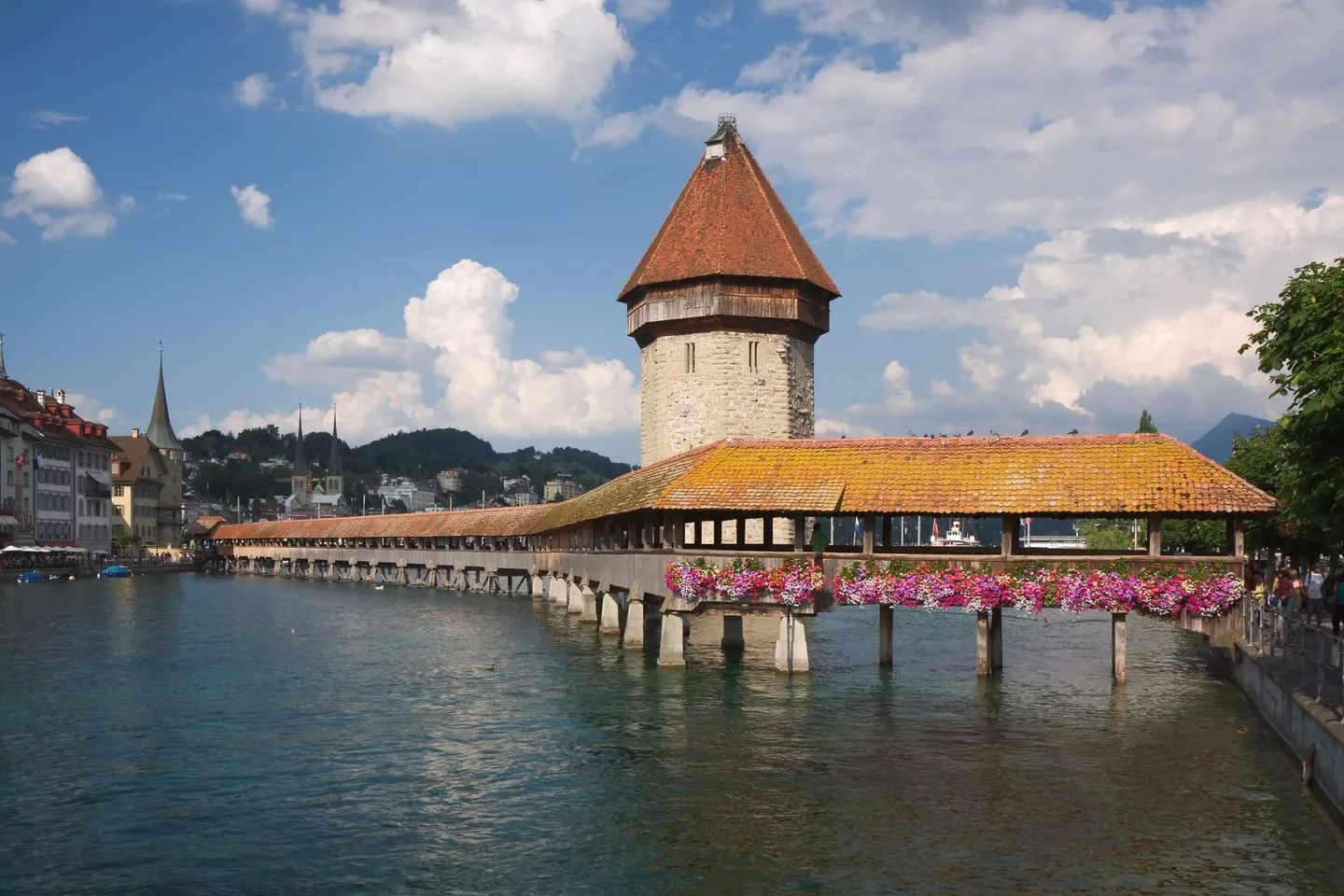 Much of the Chapel Bridge was rebuilt after a fire in 1993, which is why many of the painted roof panels are missing.
On day two, go up a mountain. Rigi is the better value: take the boat across the lake to Vitznau and the cogwheel railway to the summit, then return via Weggis by cable car. It is fully covered by the Swiss Travel Pass. Pilatus is steeper and more dramatic, with the cogwheel railway from Alpnachstad usually running only from spring to autumn, but it costs extra even with a pass.
Day 3-5: Bernese Oberland
The Luzern-Interlaken Express crosses the Brünig Pass to Interlaken Ost in just under two hours, one of the prettiest regular train rides in the country. Continue 20 minutes to Lauterbrunnen and base yourself there or up in Wengen or Mürren. Lauterbrunnen is cheaper and central; the car-free villages are quieter and have the views.
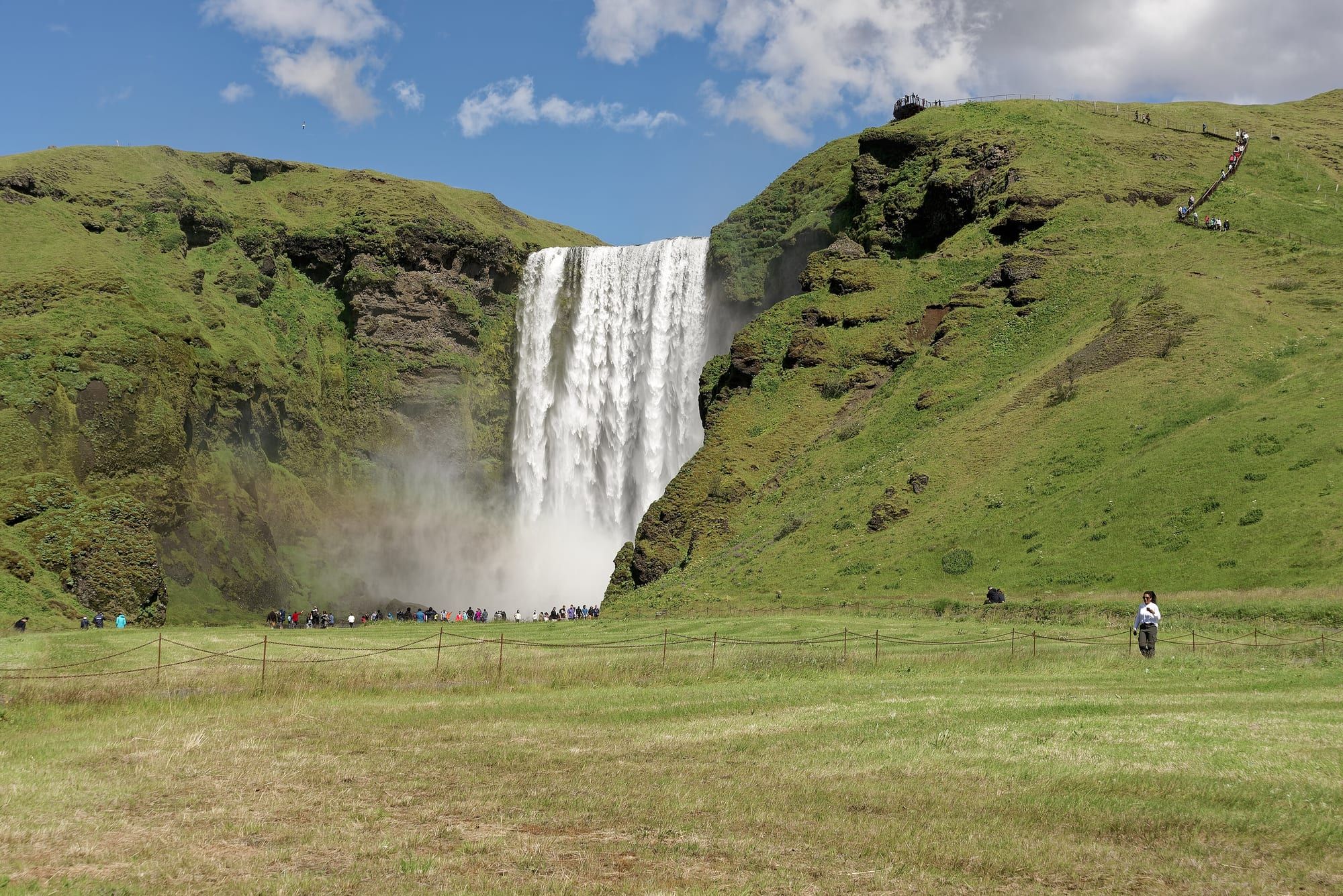
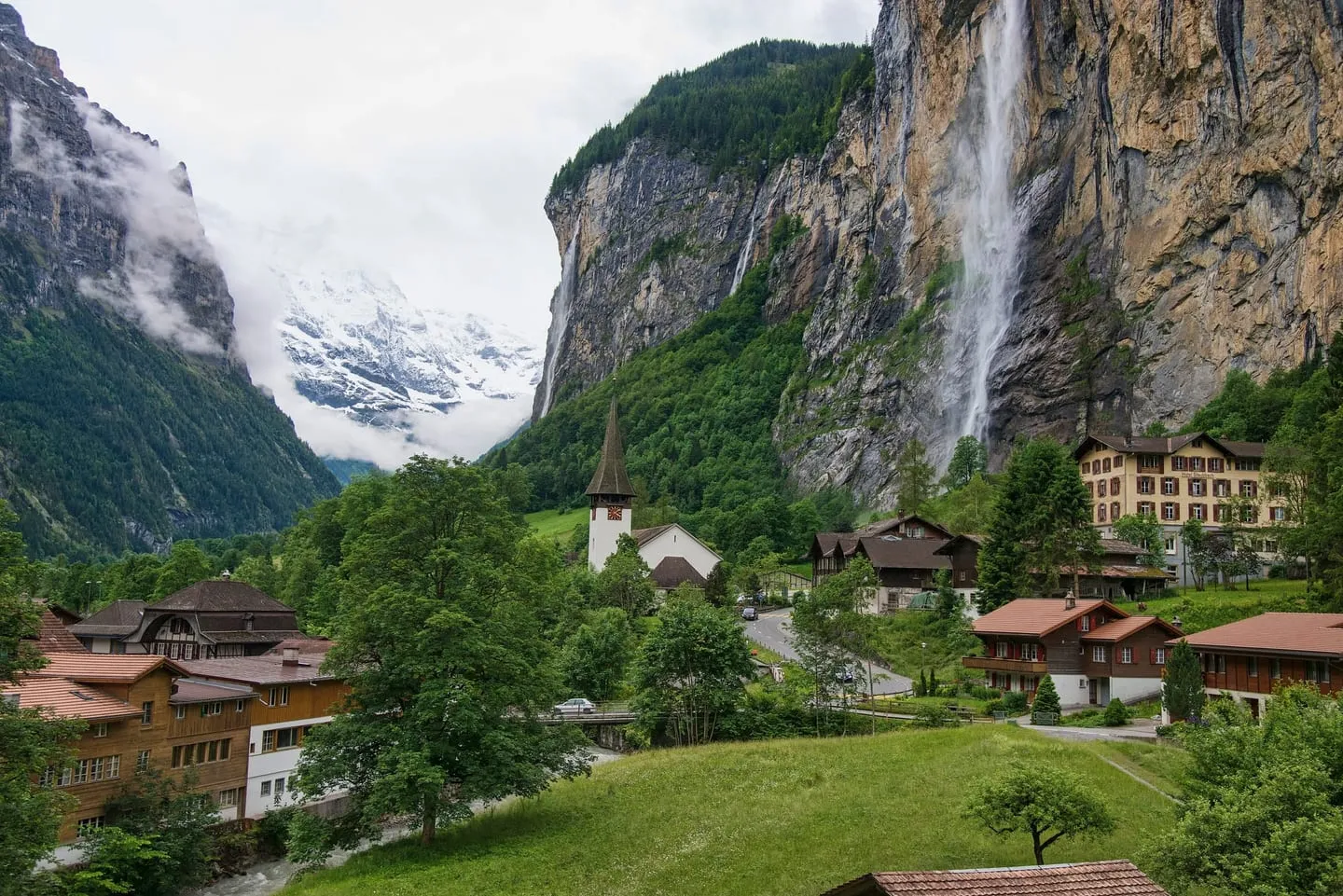 Staubbach Falls is right at the edge of Lauterbrunnen village, a ten-minute walk from the station.
Spend the first day in the valley itself: walk to Staubbach Falls, then take the bus or walk up the valley floor to Trümmelbach Falls, glacier meltwater pounding through the inside of the mountain (open roughly spring to autumn). Afterward, ride up to Mürren via Grütschalp for the cliff-edge walk with the Eiger, Mönch and Jungfrau across the valley. Save the second day for the best forecast: either the Schilthorn from Mürren, or the cable car from Wengen to Männlichen and the easy, mostly downhill walk to Kleine Scheidegg (about 90 minutes). Jungfraujoch starts from Kleine Scheidegg if you decide to splurge. Use the third day for Grindelwald and First, or keep it as the backup for a cloudy summit day.
Day 6-7: Zermatt
From Lauterbrunnen to Zermatt takes roughly two and a half to three hours, changing at Interlaken Ost, Spiez and Visp, with the Lötschberg Base Tunnel cutting under the mountains. Zermatt is car-free: drivers park in Täsch and take the shuttle train. If the Matterhorn is clear when you arrive, go straight up. The mountain is often hidden by afternoon cloud, so a first clear evening is worth more than any plan. Back in the village, the Hinterdorf lanes of old wooden barns on stone stilts are the oldest part of Zermatt and take 15 minutes to walk.
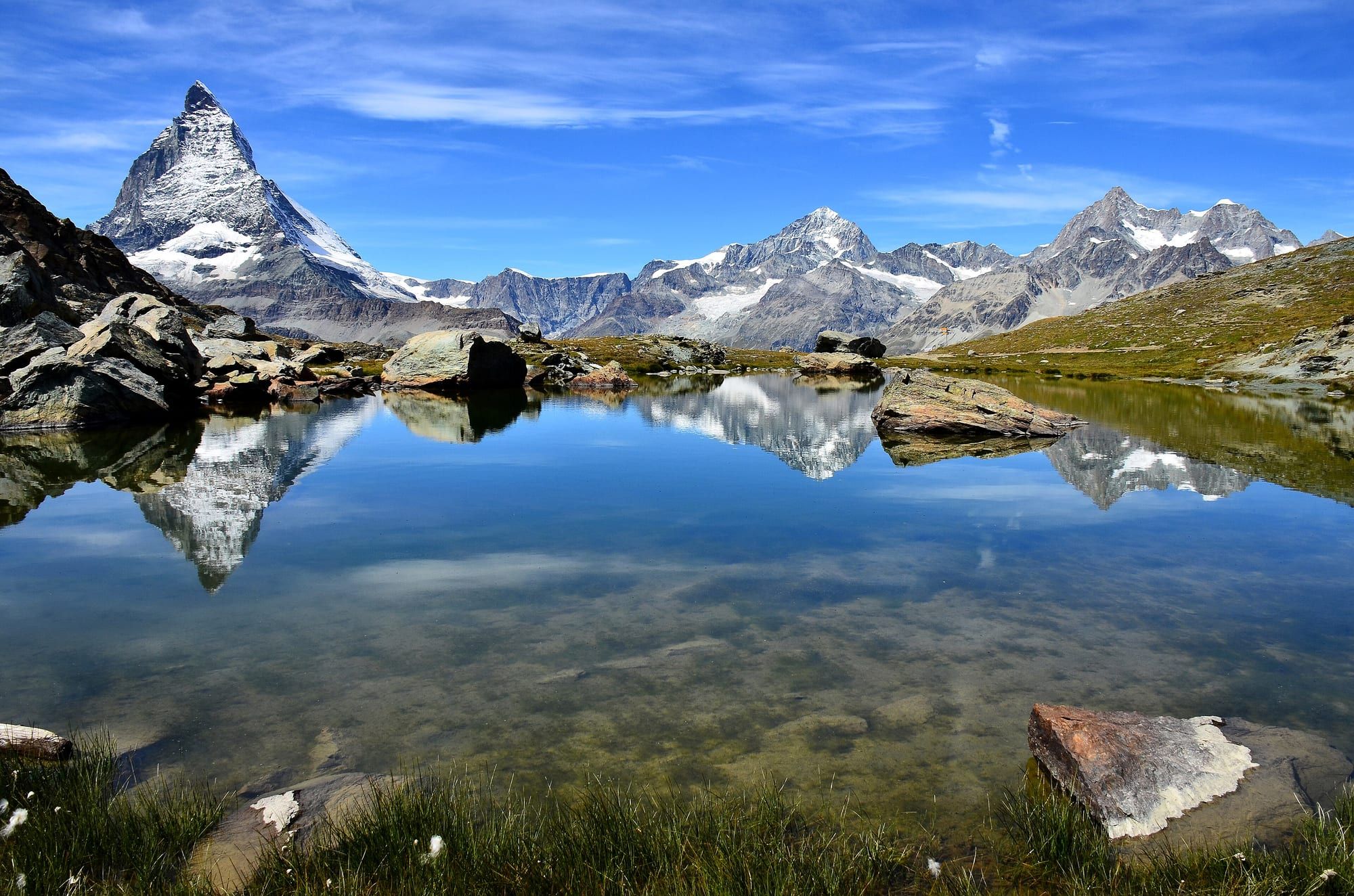
The Gornergrat railway climbs from the village to over 3,000 meters in about 35 minutes. Get off at Rotenboden on the way back down and walk 10 minutes to the Riffelsee for the reflection shot, then continue on foot to Riffelberg. If the sky is clear and budget allows, the Matterhorn Glacier Paradise cable car reaches the highest viewing platform in the Alps, at about 3,880 meters; it is discounted but not covered by the Swiss Travel Pass. On your last morning, the Five Lakes Walk from Sunnegga or a stroll through the old hamlet of Zmutt fills the time before the train out: about three and a half to four hours to Zurich or Geneva airport.
Practical tips
Buy nothing until you have priced the route. The Swiss Travel Pass (consecutive days) suits travelers who move every day; the Swiss Half Fare Card suits a slower week with fewer journeys, and SBB saver tickets for fixed trains can cut long-distance fares further. Whatever you choose, check the webcams before paying for any summit, since mountain lifts are the biggest cost and cloud is common even in summer. Book accommodation in Wengen, Mürren and Zermatt early for July and August. Supermarkets (Coop, Migros) are the easy way to keep lunch costs sane, and most places take cards, though a few mountain huts prefer cash in francs.