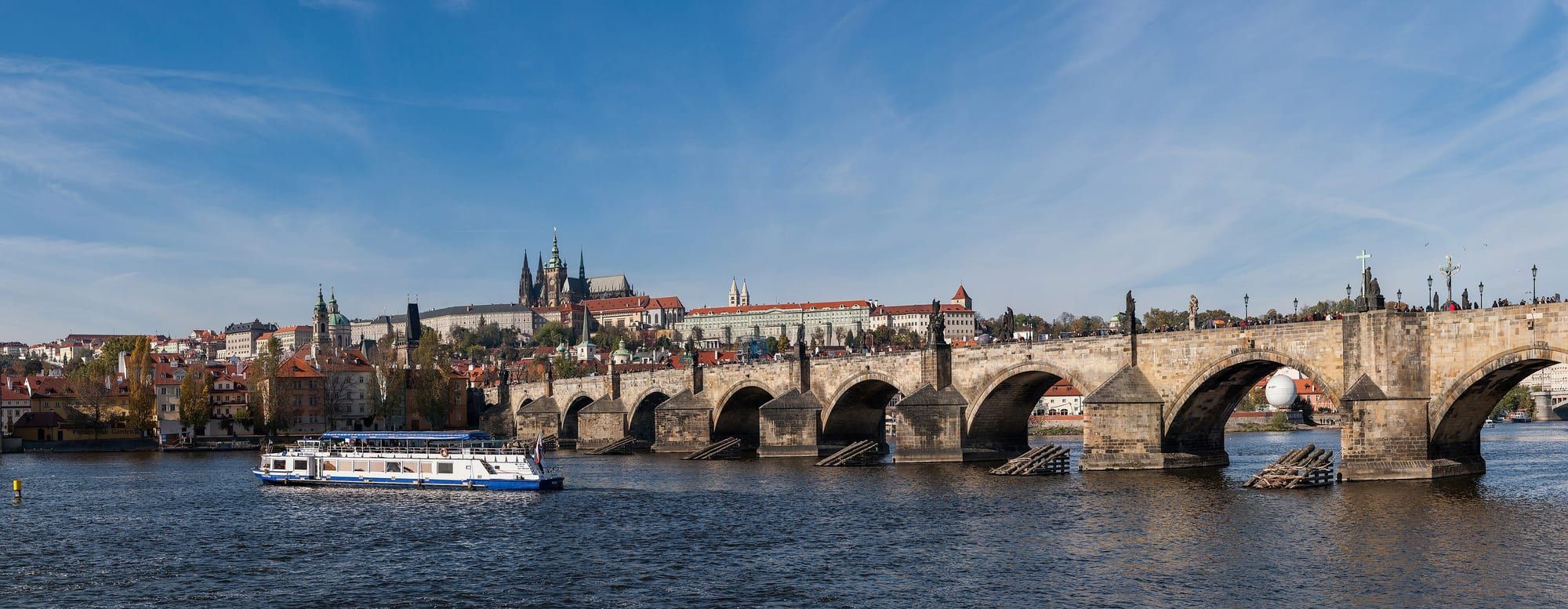
Prague’s historic centre splits neatly in two: the Old Town on the east bank of the Vltava and the Castle district with Malá Strana on the west, joined by Charles Bridge. Give each side a full day, walk the Castle hill downhill rather than up, and use the third day to get away from the crowds.
Day 1: Old Town and the Jewish Quarter
Start early in Old Town Square, before the tour groups arrive, to see the Gothic Týn Church and the painted Old Town Hall without a crowd. The Astronomical Clock on the Town Hall puts on its short show of moving apostles on the hour through the day; it is crowded and over in under a minute, so watch it once and then take the lift up the Town Hall tower for the best view over the square’s rooftops (paid).
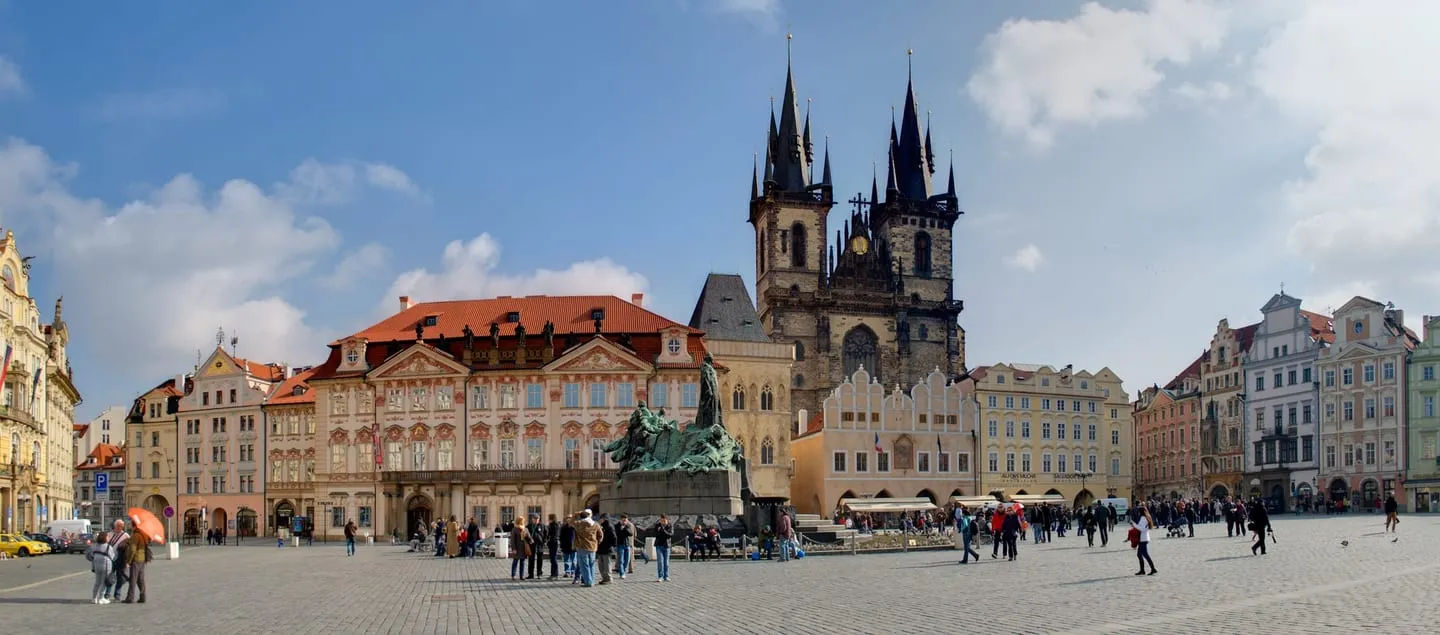 The Jan Hus memorial in the middle of the square was unveiled in 1915, 500 years after Hus was burned at the stake; the square is quietest before 9am.
A five-minute walk north up Pařížská street takes you into Josefov, the former Jewish Quarter. One Jewish Museum ticket covers several synagogues, including the Pinkas Synagogue with its wall of names, and the Old Jewish Cemetery; the Old-New Synagogue, still in use, is ticketed separately or as a combined option. The museum is closed on Saturdays and Jewish holidays, so plan this day around that. In the late afternoon, wander the lanes around the Clementinum and walk out onto Charles Bridge for the evening light on the castle, then have dinner on the Old Town side rather than on the main square, where prices are highest.
Day 2: Prague Castle and Malá Strana
Cross Charles Bridge before 8am, when you can actually see the statues, then take tram 22 up the hill to the Pohořelec stop. Start at Strahov Monastery, where the baroque library halls are viewed from the doorway, then walk downhill along Loretánská to Prague Castle. The castle courtyards are free to walk through; St. Vitus Cathedral, the Old Royal Palace, St. George’s Basilica and Golden Lane need a circuit ticket. The changing of the guard at the main gate is on the hour, and the noon one comes with a fanfare in the first courtyard.
From the castle, walk down Nerudova street into Malá Strana, the baroque quarter below the hill. Visit St. Nicholas Church, look into the Wallenstein Garden (free, open in the warmer months), then find the Lennon Wall and cross to Kampa Island by the river. If you still have energy, the funicular from Újezd climbs Petřín Hill, where the lookout tower gives a view back over the castle, and the funicular accepts standard public transport tickets.
Day 3: Kutná Hora, or Vyšehrad and Letná
For a day trip, take a morning train to Kutná Hora, about an hour away, a medieval silver-mining town on the UNESCO list. Start at the Sedlec Ossuary near the station, the chapel decorated with human bones, then take the short local train or bus to the old town for St. Barbara’s Church and the Italian Court, where the town’s silver coins were minted. You will be back in Prague for dinner.
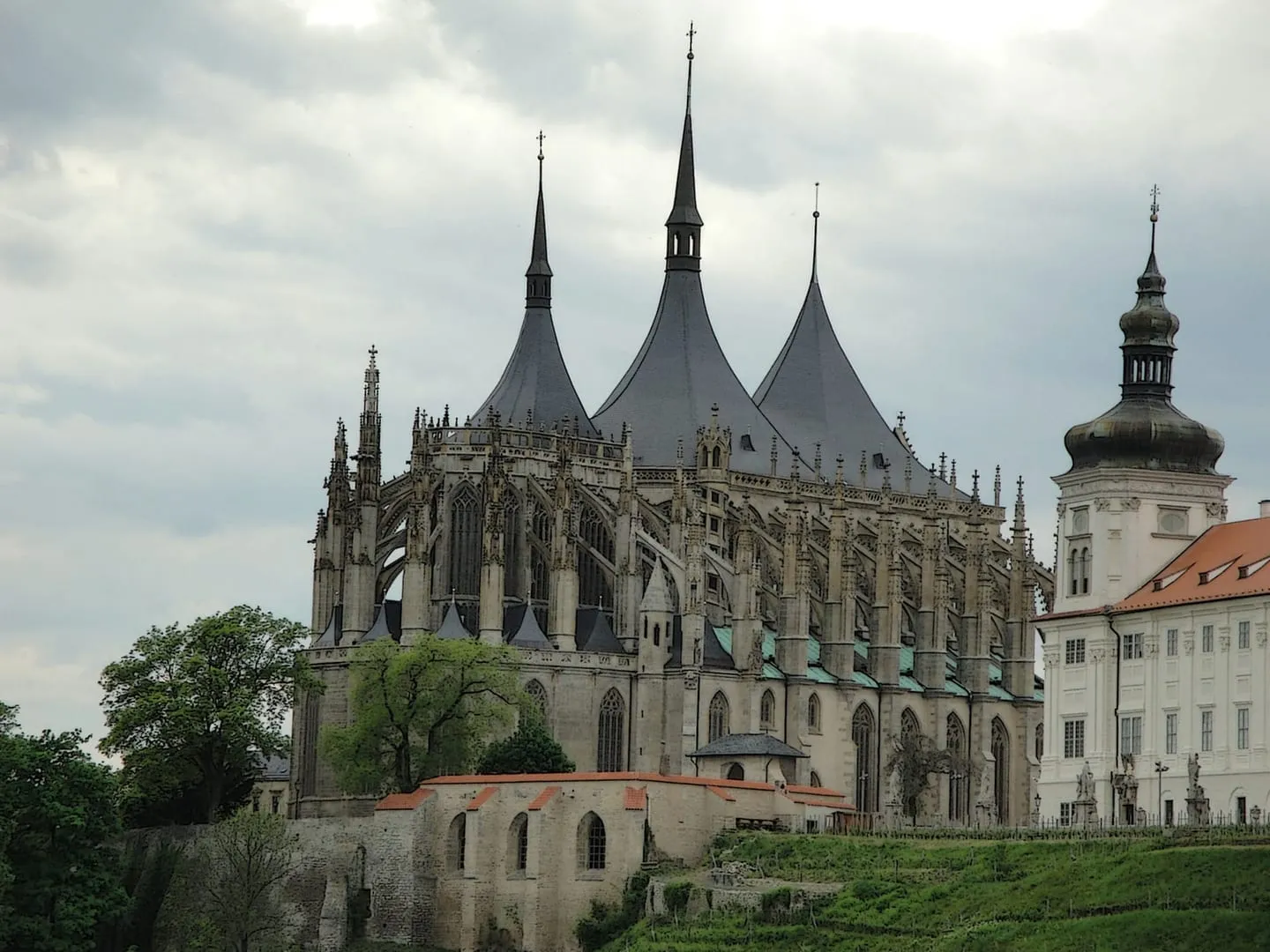 St. Barbara’s was built by the town’s miners and merchants, and its vaults carry the coats of arms of the local guilds and noble families.
To stay in the city instead, take metro line C to Vyšehrad and walk ten minutes to the fortress on its rock above the river. The grounds are free and much calmer than the castle. See the Basilica of Sts. Peter and Paul and the cemetery beside it, where Dvořák, Smetana and Mucha are buried, then walk the ramparts for the view up the Vltava. In the afternoon, cross to Letná Park on the north side of the centre, where the giant metronome stands on the site of the old Stalin monument, and finish at the Letná beer garden, which looks down over the bridges at sunset.
Practical tips
Public transport tickets cover the metro, trams, buses and the Petřín funicular. Buy them in the PID Lítačka app, at machines, or at newsagents, and stamp a paper ticket in the yellow validator the first time you use it; a 24-hour or 72-hour ticket is simpler than single fares for this route. From the airport, bus 119 runs to the Nádraží Veleslavín metro station, and the Airport Express bus goes to the main train station.
Use ATMs attached to banks rather than the standalone cash machines on tourist streets, and avoid exchange offices advertising “0% commission”, whose rates are usually poor. Use a ride-hailing app instead of hailing taxis on the street. Book Prague Castle and Kutná Hora tickets online in summer to skip the queues, and check current prices and opening times before you go, as both change by season. From late November through December, the Christmas markets fill Old Town and Wenceslas Squares, with crowds and hotel prices to match.



.jpg)